Layers of The Mission: A Celebration of Memory and Resilience
Rooted in Motion – The Living Legacy of Aztec Dance in the Mission
Series: Now and Then: Living Memories – Art on Market Street 2026
For over 35 years, groups formed by immigrants and Indigenous descendants have carried forward the ancestral practice of Aztec dance in festivals, protests, and celebrations such as Día de los Muertos and Carnaval—making it a vital thread in the cultural fabric of San Francisco and the Bay Area.
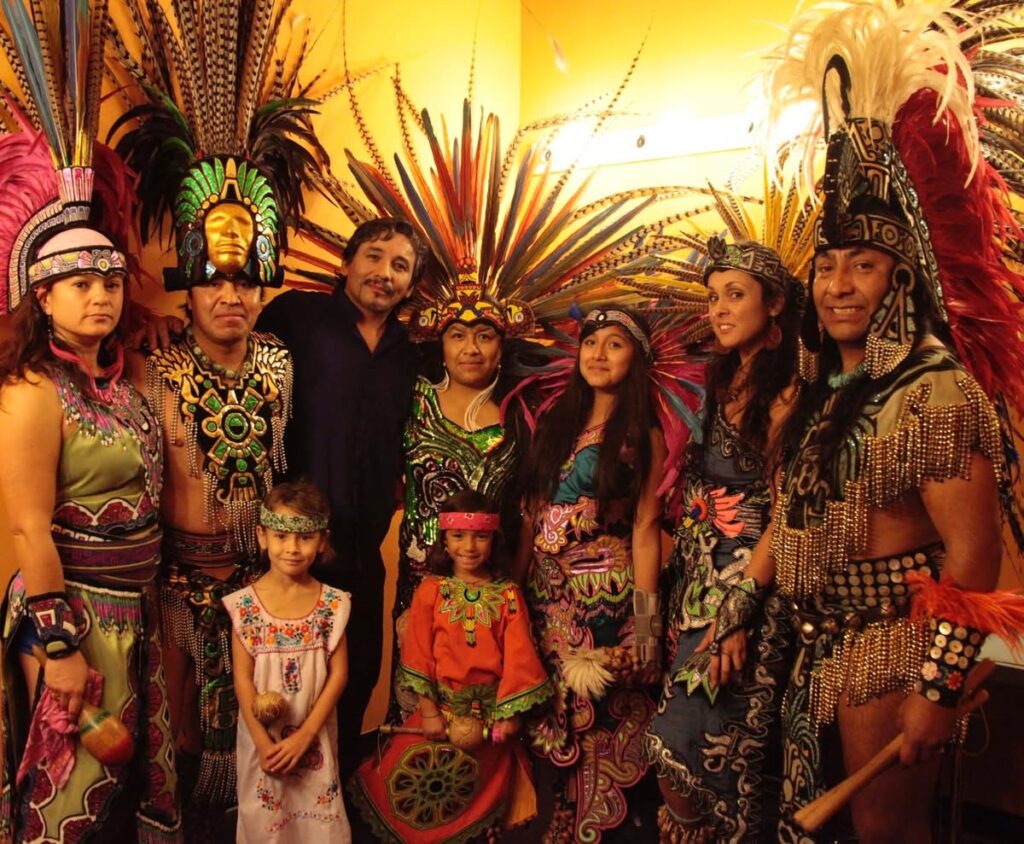
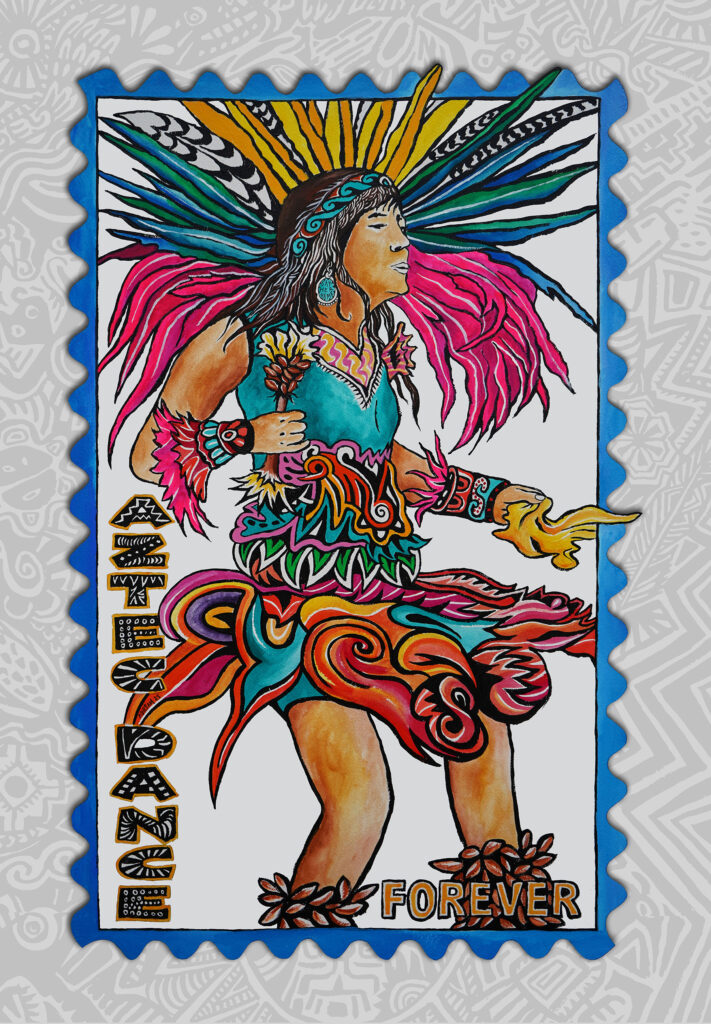
Aztec dance—a living offering that connects body, land, and memory—preserves and renews Indigenous identities with every step. The dancer featured in this poster is Xochitl, who began dancing at age two and now, at 25, co-directs the group her parents, Connie Rivera and Ricardo Peña, founded after immigrating from Toluca 35 years ago, carrying the teachings of their elders. We dedicate this poster and story to the memory of Ricardo Peña, father of Xochitl, whose legacy continues to inspire and guide the community. The group embodies a family heritage that weaves Mexica, Huichol, Otomí, and Mazahua roots into the heart of the Mission.
They are not alone—many Aztec dance groups across the Bay Area carry these traditions forward, each adding vital cultural roots to the evolving story of the community. Together, they form a living history written every day through movement, celebration, and resilience.
Following Rebecca Solnit’s call for “more history, not less,” this project shares a story not always found in books, but alive in the bodies that dance and teach—a history written through movement, memory, and resistance.
The poster design honors Aztec dance with vibrant feathers, ceremonial attire, and rattles. Surrounding the dancer, a symbolic border intertwines ancestral icons from Aztec, Maya, and Inca cultures—sun, water, maize, and sacred deities—celebrating Indigenous roots and the enduring connection to the land.
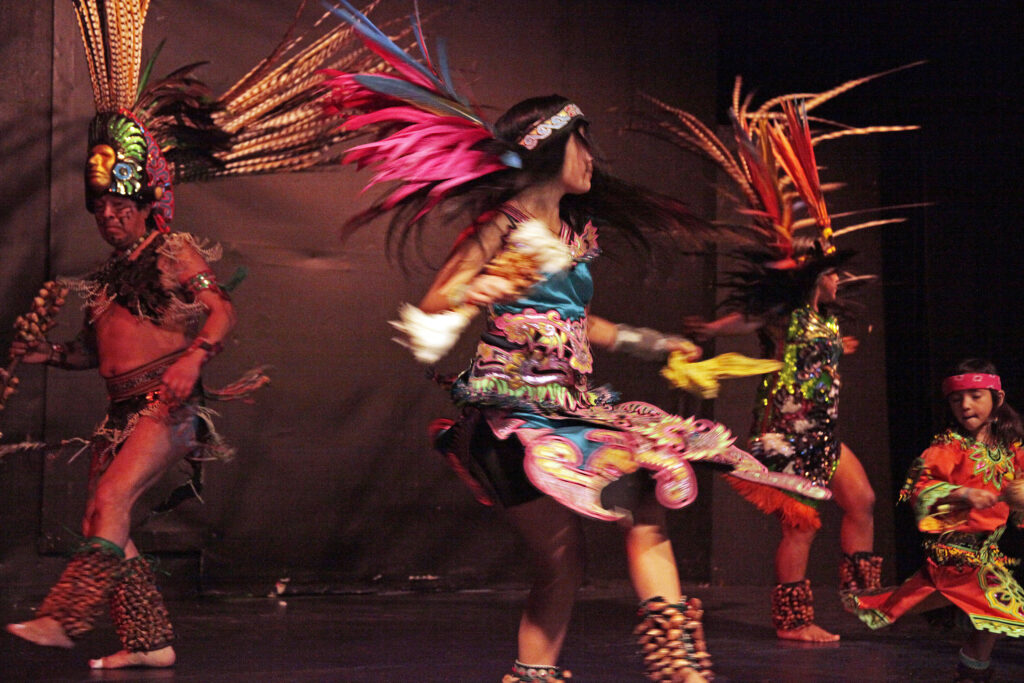
Here some images of Mixcoatl Aztec Dancers and Xoxhitl
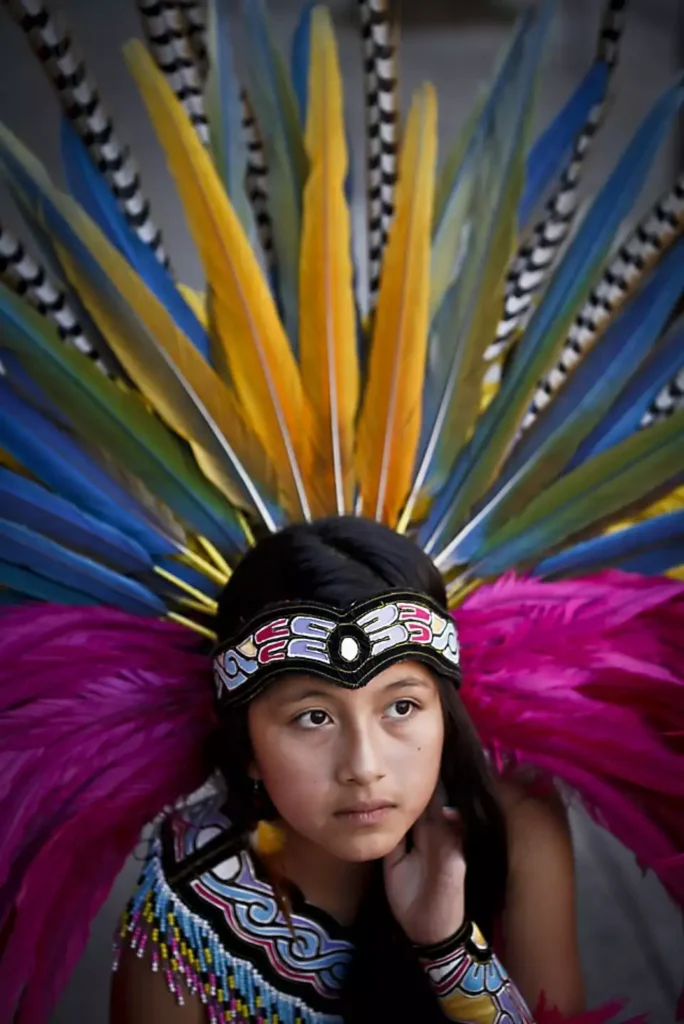
In Aztec culture, feathers—especially from the quetzal—symbolized divine connection, social connection, and the forces of nature, serving as powerful spiritual, artistic, and ritual elements in dance.
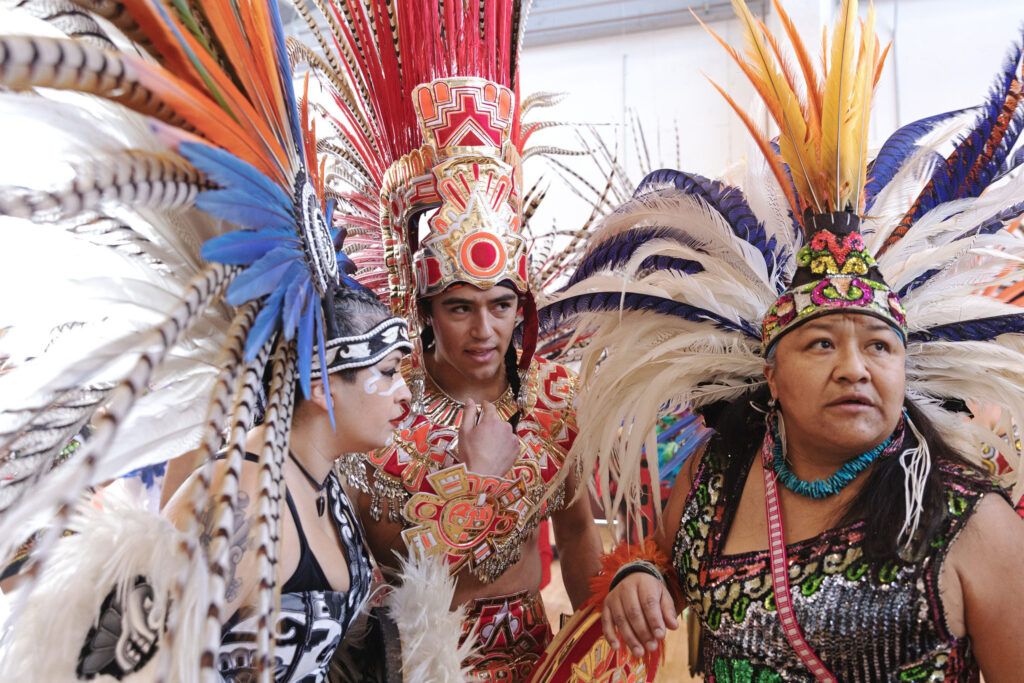
The Mixcoatl Aztec Dance Group has been teaching dance and its meanings for free for over 20 years at the Mission Cultural Center for Latino Arts.
- Español :
Enraizados en el movimiento – El legado vivo de la danza azteca en la Misión
Serie: Ahora y entonces: Memorias vivas – Arte en la calle Market 2026
Durante más de 35 años, grupos formados por inmigrantes y descendientes indígenas han mantenido viva la práctica ancestral de la danza azteca en festivales, protestas y celebraciones como Día de los Muertos y Carnaval, convirtiéndose en un hilo vital del tejido cultural de San Francisco y el Área de la Bahía.
La danza azteca—una ofrenda viva que conecta cuerpo, tierra y memoria—preserva y renueva las identidades indígenas con cada paso. La bailarina que aparece en este póster es Xochitl, quien comenzó a bailar a los dos años y ahora, a los 25, codirige el grupo que sus padres, Connie Rivera y Ricardo Peña, fundaron tras emigrar de Toluca hace 35 años, llevando consigo las enseñanzas de sus mayores. Dedicamos este póster e historia a la memoria de Ricardo Peña, padre de Xochitl, cuyo legado sigue inspirando y guiando a la comunidad. Este grupo encarna una herencia familiar que entrelaza raíces mexica, huichol, otomí y mazahua en el corazón del Mission.
No están solos: muchos grupos de danza azteca en el Área de la Bahía continúan transmitiendo estas tradiciones, cada uno aportando raíces culturales esenciales a la historia viva de la comunidad. Juntos, forman una historia en movimiento, escrita cada día con celebración, memoria y resiliencia.
Siguiendo el llamado de Rebecca Solnit a “más historia, no menos”, este proyecto narra una historia que no siempre se encuentra en los libros, pero que vive en los cuerpos que bailan y enseñan—una historia escrita a través del movimiento, la memoria y la resistencia.
El diseño del póster honra la danza azteca con plumas vibrantes, vestimenta ceremonial y sonajas. Alrededor de la bailarina, un borde simbólico entrelaza íconos ancestrales de las culturas azteca, maya e inca—sol, agua, maíz y deidades sagradas—celebrando las raíces indígenas y la conexión perdurable con la tierra.

Ricardo Peña. Photo by Alexa Treviño